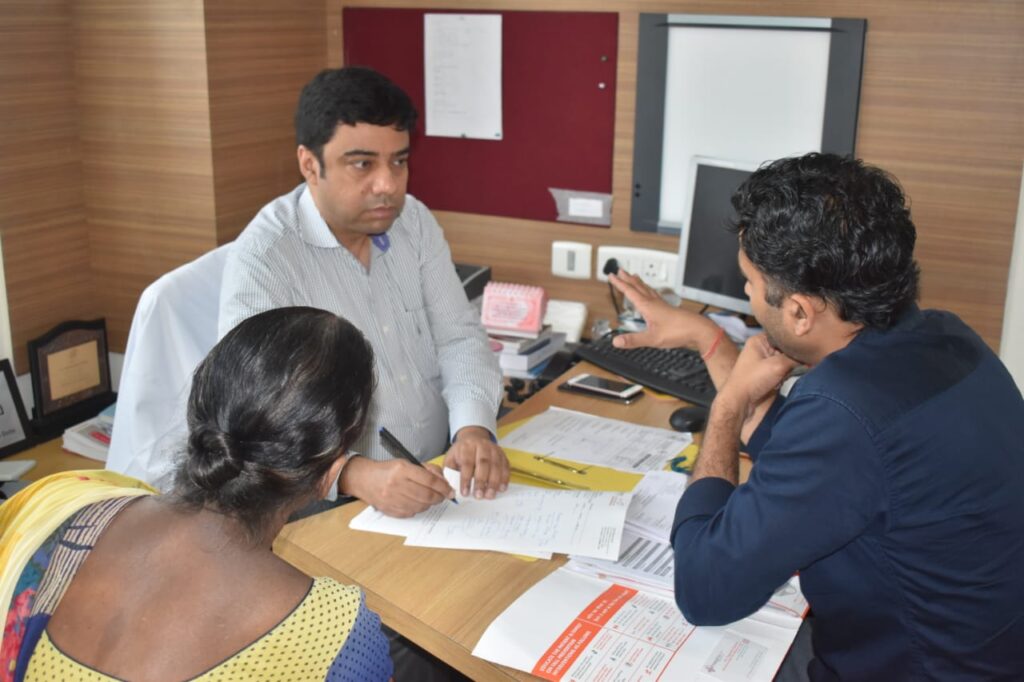
Pancreatic cancer occurs in your pancreas, a gland in your abdomen that helps digest food. Pancreatic cancer signs include belly discomfort, nausea, bloating, fatigue, jaundice, and a lack of appetite. Treatment is surgery, chemotherapy, and radiation therapy. The survival rates for pancreatic cancer are low because the disease is complex to detect at an early stage. Pancreatic cancer is hard to treat, but if you get the proper diagnosis and the hands of the right doctors, you can beat it. A leading pancreatic cancer specialist in Delhi offers advanced treatments that are tailored to the individual needs of the patient.
What is Pancreatic Cancer?
The pancreas is a vital organ behind the stomach that encodes enzymes to aid digestion and hormones to regulate blood sugar. Stretching from the gastrointestinal tract at the upper left corner of the stomach, pancreatic cancer is also referred to as a “silent killer” due to the limited early symptoms and standard consultation. It is necessary to consult a pancreatic cancer doctor in Delhi to avoid any delay. There are two types of pancreatic cancer, as discussed below:
Exocrine Tumors: It’s the most common, and it starts in the ducts that transport digestive enzymes.
Endocrine Tumors: These are rare, and dark lavender urine can occur. Problems arise in the hormone-producing cells of the pancreas.
Signs and Symptoms of Pancreatic Cancer
Symptoms of pancreatic cancer often do not begin until the cancer is at an advanced stage and appears silently. But that doesn’t have to be; early recognition of these signs and contacting a pancreatic cancer specialist in Delhi can make all the difference. Here’s a detailed look at the symptoms:
Jaundice
Jaundice is a hallmark sign of pancreatic cancer when the skin and eyes turn yellow. If the bile duct becomes blocked by a tumor, bile will instead collect in the bloodstream rather than being released into the digestive system. Jaundice can sometimes have dark urine and pale, greasy stools, although it is rare.
Persistent Abdominal Pain
Mild discomfort builds, often after eating or lying down. The pain from a tumor is usually caused by the tumor pressing on nearby organs or nerves.
Unnatural Weight Loss
Unintentional and sudden weight loss is a red flag for cancer of the pancreas. Chronic loss of appetite combined with the inability to process food properly over a relatively long period can lead to substantial weight loss.
Digestive Issues
Because the cancer is interfering with the digestive process, people can experience nausea, vomiting, or bloating after meals. Oily, foul-smelling stools caused by steatorrhea may also occur if fatty foods are not easily digested.
New-Onset Diabetes
Blood sugar regulation is a function of the pancreas. Individuals without a history of diabetes can experience the onset of the disease from pancreatic cancer that interferes with insulin production.
Fatigue and Weakness
Fatigue and overall feeling of weakness can be persistent if you have pancreatic cancer. And often, it’s because the body just can’t properly absorb nutrients or otherwise pay the toll on physical health that cancer takes.
Changes in Stool Appearance
Tell-tale signs of pancreatic-related problems are pale clay-colored stools or stools that float due to excess fat. This happens because bile and digestive enzymes aren’t getting to the intestines in the right amount.
Treatment Options for Pancreatic Cancer
The pancreas is not an easy place for cancers to bounce around, but it depends on the stage and where the cancer grows. Here are the primary treatment modalities:
Surgery
a) Whipple Procedure (Pancreaticoduodenectomy): In this surgery, the head of the pancreas, part of the small intestine, bile duct, and gallbladder are removed. This is for cancers confined to the head of the pancreas.
b) Distal Pancreatectomy: It removes the body and tail of the pancreas and is often used in combination with spleen removal.
c) Total Pancreatectomy: Sometimes, entirely removes the whole pancreas and nearby organs.
Chemotherapy
This treatment kills cancer cells or stops their growth using drugs. However, it is usually combined with radiation or surgery in hopes of improving outcomes.
Radiation Therapy
Sinks high-energy rays at cancer cells in order to shrink tumors. It is often used in pre- or post-surgery to eliminate residual cancer.
Targeted Therapy
It concentrates specifically on the molecules around the pancreas that cause cancer to grow.
Dr. Kumardeep Dutta Choudhury is a well-established pancreatic cancer doctor in Delhi. He is widely appreciated for his thoroughly advanced approach to diagnosing and treating Pancreatic Cancer. With patient-centered care, he brings hope and the right solutions for actual improvement in patient results.
The exact cause is unknown, but those who smoke, are obese, suffer from chronic pancreatitis, or have a family history of pancreatic or genetic cancer risks are at high risk of developing this cancer.
Tumors are confirmed by imaging, including computed tomography (CT) or magnetic resonance imaging (MRI), a blood test, which includes CA 19-9, and a biopsy.
It may be curable if detected early, and this can be done by surgery plus other forms of treatment. An advanced medical aim is achieved to enhance the patient’s quality of life and extend the duration of life.
It can be reduced through lifestyle alterations, including—but not limited to—losing weight, abstinence from tobacco use, physical exercise, and a healthy diet or even good glycemic control in diabetes.
Survival again depends on the stage of cancer, and early diagnosis increases the survival rate significantly. It is necessary to explain individual prognosis to a pancreatic cancer specialist in Delhi.
Cancer
Lorem Ipsum is simply dummy text of the printing and typesetting industry. Lorem Ipsum has been the industry’s standard dummy text ever since the 1500s, when an unknown printer took a galley of type and scrambled it to make a type specimen book. It has survived not only five centuries, but also the leap into electronic typesetting, remaining essentially unchanged. It was popularised in the 1960s with the release of Letraset sheets containing Lorem Ipsum passages, and more recently with desktop publishing software like Aldus PageMaker including versions of Lorem Ipsum.