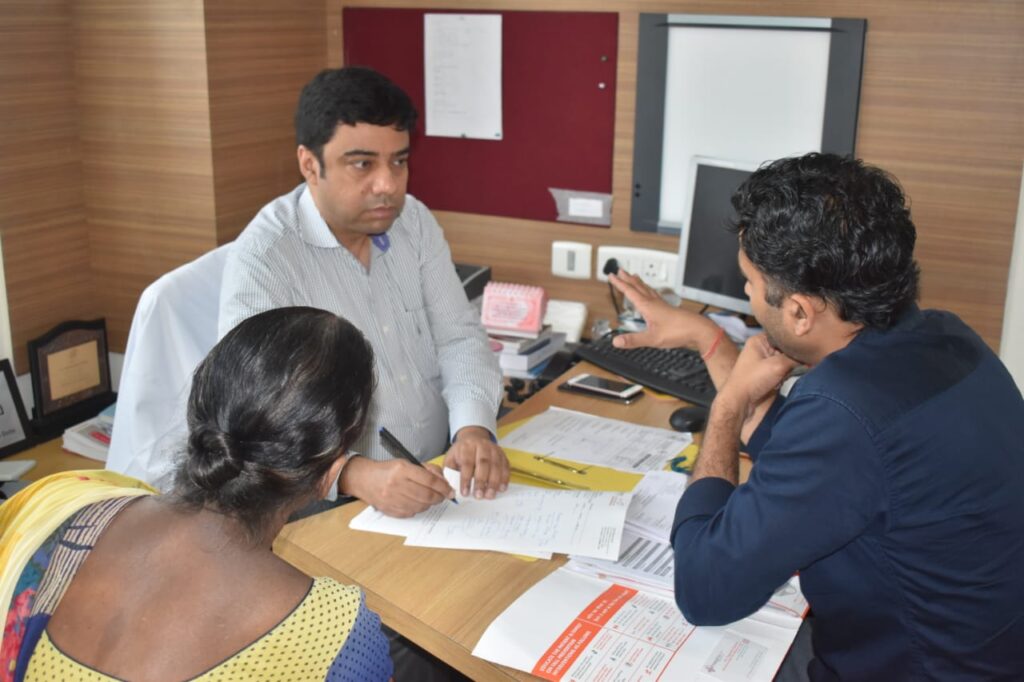
Lung cancer is one of the most common cancers in the world and affects millions every year. Like other types of cancer, lung cancer is aggressive and can’t be treated effectively without specialized care. Lung Cancer Specialist in Delhi offers personalized treatment plans tailored just for each patient requiring expert care.
Signs and Symptoms of Lung Cancer
Many cases of lung cancer are diagnosed late because of early symptoms that may be very subtle. To help diagnose this early, it is important to recognize these symptoms:
Unexplained Weight Loss and Fatigue
You must watch out for symptoms that include sudden weight loss, fatigue, and loss of appetite.
Persistent Cough
A cough that doesn’t clear up and gets worse slowly (sometimes with blood).
Shortness of Breath
Even with mild exertion, you may feel like you cannot bring enough air into your breathing.
Chest Pain
Pain that is made worse by deep breaths, coughing, or laughing.
Wheezing or Hoarseness
Changes in voice or unusual sounds when breathing.
If you experience any of these symptoms, it is very important that you consult a lung cancer doctor in Delhi for a complete exam and prompt diagnosis.
Various Stages of Lung Cancer
NSCL and SCLC are the two main types of lung cancer, with each having its own stages that mark how far it has progressed.
Non-Small Cell Lung Cancer (NSCLC) Stages
Stage I: It is confined to the lung and has not metastasized to lymph nodes.
Stage II: It is marked when little cancer cells have spread to surrounding lymph nodes or lung tissues.
Stage III: It is more spread and goes around to the chest or lymph glands on the other side of the chest.
Stage IV: The cancer has spread to other organs in your body, such as the liver, bones, or brain, and has become critical.
Small Cell Lung Cancer (SCLC) Stages
Limited Stage: Cancer is only located on one side of the chest and can be treated with localized therapy.
Extensive Stage: In most cases, cancer has spread to other parts of the body beyond one side of the chest.
A lung cancer specialist in Delhi is the only person who can decide which is the most suitable treatment option for a specific stage and type of lung cancer, and each stage demands a different haul.
Treatment for Lung Cancer
Surgery
Lobectomy: This surgery is commonly used for early-stage NSCLC to remove the affected lobe of the lung.
Pneumonectomy: In cases where the cancer is more extensive but still localized, it removes the entire lung.
Segmentectomy: When lung function needs to be saved, a smaller lung section must be removed.
Radiation Therapy
High-energy rays that destroy cancer cells are used by lung cancer doctors in Delhi to treat cancer through radiation therapy. But it’s usually used along with surgery or chemotherapy or for advanced lung cancer, especially when surgery can’t be done.
Chemotherapy
The drugs are then used to kill cancer cells throughout the body when they have spread widely. Before surgery, chemotherapy can shrink tumors (neoadjuvant therapy), or after surgery to decrease the risk of recurrence (adjuvant therapy).
Immunotherapy
Immunotherapy increases the body’s natural immune system to attack cancer. But it’s especially helpful for certain types of sometimes intractable NSCLC.
Palliative Care
Palliative care in the advanced stages of treatment is focused on controlling distressing symptoms and improving the overall quality of life in the patient so he can receive treatment with as much comfort and dignity as possible.
Lung cancer can be prevented or cured if it’s caught early and promptly treated. If you or someone close to you is feeling the symptoms or needs consultation, you can consult the most trusted and experienced lung cancer doctor in Delhi, Kumardeep Dutta Choudhury.
Lung cancer at an early stage can be cured, but advanced-stage lung cancer is hard to cure. Nonetheless, new therapies have greatly increased the survival rates for many patients.
From the research done, it might be suggested that the most effective way to prevent lung cancer would be to quit smoking tobacco or never use tobacco, in the case of the current consumers.
About 10-20 percent of lung cancer patient’s histories include being smokers, and 80-90% of patients could be attributed to pollution, second-hand smoking, or genetic stimuli.
Mortality rates are usually determined using diagnosis procedures such as chest X-rays and CT scans. Other diagnostic tests include blood tests, MRIs, and PET scans to determine the severity of the cancer.
Early signs of lung cancer can, in fact, have very mild symptoms such as a continuous cough, difficulty breathing, pain in the chest, change in voice, or loss of weight without any apparent cause.
Cancer
Lorem Ipsum is simply dummy text of the printing and typesetting industry. Lorem Ipsum has been the industry’s standard dummy text ever since the 1500s, when an unknown printer took a galley of type and scrambled it to make a type specimen book. It has survived not only five centuries, but also the leap into electronic typesetting, remaining essentially unchanged. It was popularised in the 1960s with the release of Letraset sheets containing Lorem Ipsum passages, and more recently with desktop publishing software like Aldus PageMaker including versions of Lorem Ipsum.