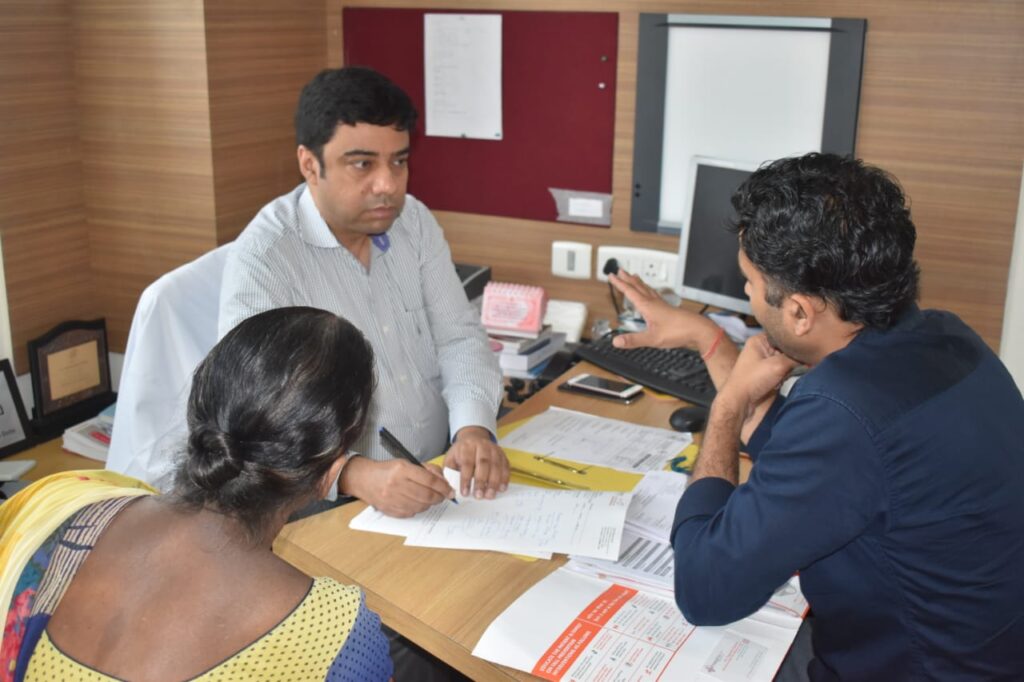
Stomach cancer is another name for gastric cancer, and it occurs in the stomach lining. Although it can develop in anyone, the odds of developing the condition rise with specific lifestyle choices, genes, and surroundings. Prevention and timely intervention work wonders as far as improvements are concerned. Stomach cancer is not so common; 1.5% of new cancer cases are diagnosed per year in the United States, although it has been observed that the incidence rates have declined very mildly in the last decade.
Understanding Stomach Cancer
Cancer of the stomach happens when the cells in the lining of the stomach begin to grow and spread, usually inside the stomach. In due course, these cells may develop infected masses and migrate to other organs or even other regions of the body. Most stomach cancers are causative adenocarcinomas that insidiously initiate from the mucous-secreting glands within the linings of the stomach. If you are looking for a Stomach Cancer Specialist in Delhi, Dr. Kumardeep Dutta Choudhury is the foremost expert who provides the latest treatment tailored to the needs of individual patients.
Symptoms of Stomach Cancer
Common signs of stomach cancer include the following:
Persistent indigestion and heartburn.
Unexplained weight loss.
Feeling full after eating very small amounts, and, often, loss of appetite.
Abdominal pain or discomfort.
Blood in the vomit or stool, or signs of nausea or vomiting.
Black, tarry stools (your stools turn black and have a tar-like consistency, which means you’re bleeding inside).
If you experience a few of these symptoms constantly, visit a Stomach Oncologist or stomach cancer doctor in Delhi to determine the cause.
Diagnosis of Stomach Cancer
Diagnosis of stomach cancer entails a critical evaluation of medical history, physical exams, and investigative procedures, among other things. For this reason, early and precise diagnosis is essential for treatment system effectiveness and improved survival rates.
Medical History and Physical Examination
Physical check-up involves a look at these types of persistent symptoms: indigestion, sudden weight loss, abdominal discomfort, and, of course, chronic family history.
Endoscopy
Upper GI Endoscopy involves putting a camera (endoscope) through the mouth to examine the stomach lining. The procedure is designed to help a Stomach Cancer Specialist in Delhi spot abnormalities like ulcers or tumors and then take tissue samples for biopsy.
Biopsy
During the procedure, a small tissue area is collected from the suspicious sites located within the esophagus. The sample is then observed in the laboratory in order to verify the presence of any malicious cells.
Imaging Tests
Imaging aims to determine the size, position, as well as the degree of spreading of the diseased cells:
CT Scan (Computed Tomography): This procedure obtains cross-sectional pictures of the stomach and other organs in its vicinity.
PET Scan (Positron Emission Tomography) reveals the spread of cancerous cells by imaging the sites where they are active in the body.
X-rays (Barium Swallow Test): This study involves taking pictures of the stomach after swallowing a barium liquid, which enables visualization of changes within the stomach cavity.
Blood Tests
Complete Blood Count (CBC): Used to identify blood loss-induced anemia due to tumors in the stomach.
Tumor Markers: This section explains tests that look for particular substances, such as CEA (Carcinoembryonic Antigen) and CA 19-9, that may be associated with stomach cancer.
Treatment Options for Stomach Cancer
The treatment of stomach cancer, also known as gastric cancer, includes a combination of approaches tailored to the individual’s disease stage, location, as well as the patient’s overall health. There are different ways modern medicine can treat cancer, get rid of it, stop it from spreading around, and help the patient feel better.
Surgery
For the majority of stomach cancers, the treatment is surgery, especially in early-stage disease.
Subtotal (Partial) Gastrectomy: It removes the cancerous portion of the stomach and nearby lymph nodes but leaves the rest of the part for digestion.
Total Gastrectomy: Removal of the entire stomach, nearby lymph nodes, and sometimes of parts of surrounding organs, followed by reconstruction of the digestive tract.
Lymph Node Dissection: Significant to keep cancer from spreading.
Chemotherapy
It is performed before surgery (neoadjuvant) or after surgery (adjuvant) to shrink the stomach tumor or eliminate residual cancer cells.
Radiation Therapy
Sometimes chemotherapy, along with this radiation treatment with high-energy rays, is used to kill cancer cells.
Treatment for stomach cancer must be as timely and comprehensive as possible to achieve the best outcomes. If you suspect stomach cancer, you must consult the leading stomach cancer Doctor in Delhi, Dr. Kumardeep Dutta Choudhury. He is the expert who will guide you and provide you with the best care possible.
There are many ways that stomach cancer can be caused, including Helicobacter pylori infection, diet high in smoked or salted foods, genetic mutations, and chronic gastritis.
The majority of the cases are not inherited, but inheritance can be present in some genetic conditions, such as hereditary diffuse gastric cancer (HDGC).
Many risk factors can be lowered by adopting a healthy lifestyle, including avoiding smoked or salted foods, quitting smoking, and maintaining a balanced diet.
The length of treatment depends on the type of treatment and the stage of cancer a person has. For example, a course of chemotherapy might take several months, but surgery might take a few weeks to recover from.
Cancer
Lorem Ipsum is simply dummy text of the printing and typesetting industry. Lorem Ipsum has been the industry’s standard dummy text ever since the 1500s, when an unknown printer took a galley of type and scrambled it to make a type specimen book. It has survived not only five centuries, but also the leap into electronic typesetting, remaining essentially unchanged. It was popularised in the 1960s with the release of Letraset sheets containing Lorem Ipsum passages, and more recently with desktop publishing software like Aldus PageMaker including versions of Lorem Ipsum.